
Mastering Camera Settings for Beginners: Start Shooting with Confidence

Theme selected: Mastering Camera Settings for Beginners. Step into photography with clear, friendly guidance that turns confusing buttons into creative choices. Stick around for stories, hands-on exercises, and practical tips you can try today. Comment with your questions and subscribe if you want weekly skill-boosting challenges.

Use Camera Modes Intelligently

Auto guesses everything, while Program (P) still helps but lets you tweak ISO, exposure compensation, and flash. Try P at a family event, then nudge exposure up or down. Comment when you notice your first consistent improvement in skin tones.

Use Camera Modes Intelligently

In Aperture Priority (A/Av), you choose depth-of-field and the camera picks shutter speed. Ideal for portraits, food, and landscapes. Set f/2.8 for dreamy backgrounds, f/8 for sharp scenes. Tag us with your favorite aperture experiment and what changed.
Focus with Intention

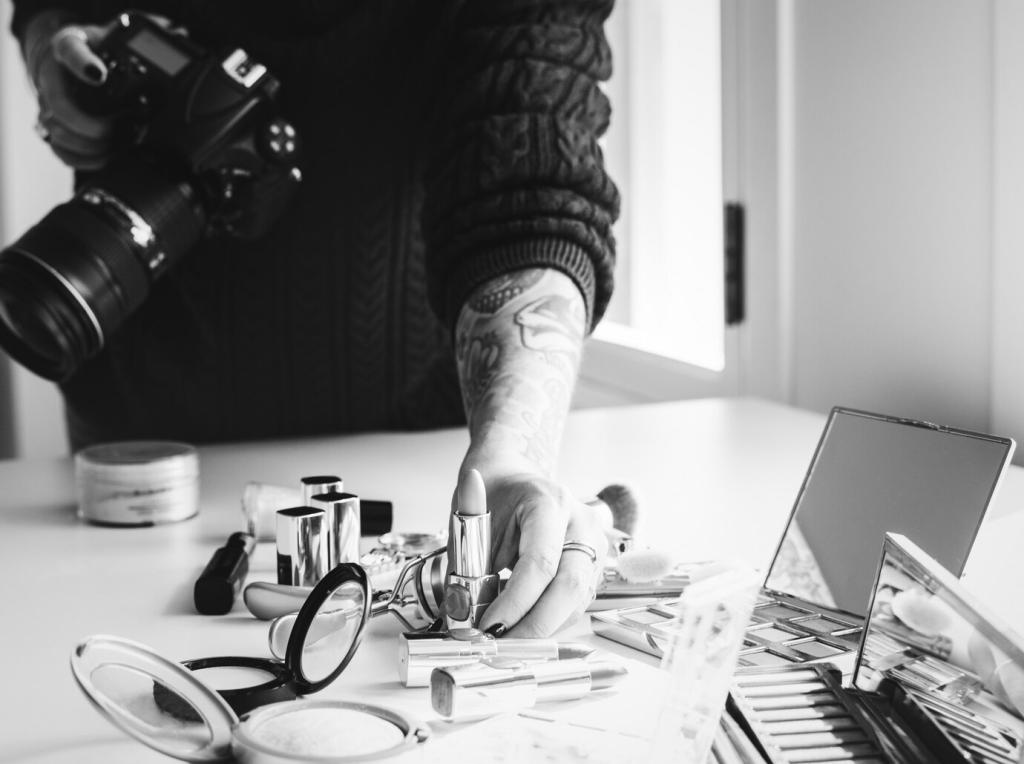
Choose one focus point and place it on your subject’s eye for portraits or the leading detail in a product shot. Recompose slightly if needed. Practice three frames per subject. Comment when your keeper rate jumps noticeably.

White Balance and Color Confidence

Start with presets to neutralize color casts quickly. Tungsten fixes orange indoor lights; Shade warms cool outdoor scenes. Compare three frames using Auto, Daylight, and a preset. Share which preset felt most natural in your living room lighting.

Metering, Histograms, and Exposure Compensation

Evaluative reads the whole scene, great for general use. Center-weighted favors the middle, helpful for portraits. Spot isolates a small area—perfect for backlit subjects. Try all three on the same scene and report which handled harsh sun best.

Metering, Histograms, and Exposure Compensation

Your LCD can mislead in bright daylight. The histogram shows tones objectively. Aim to avoid clipping highlights unless intentional. Practice exposing for the subject, then check the graph. Share a screenshot and what you adjusted to fix clipping.

Metering, Histograms, and Exposure Compensation

Use +1 EV to brighten snowy scenes; use −1 EV to tame bright beaches. It’s fast and powerful in semi-auto modes. Spend ten minutes bracketing a backlit portrait. Post your favorite frame and the compensation value that saved it.

A 7-Day Starter Challenge

Day 1: Aperture portraits. Day 2: Shutter motion. Day 3: ISO at dusk. Day 4: Focus drills. Day 5: White balance tests. Day 6: Metering modes. Day 7: Manual only. Share your favorite day and lesson learned.

Low-Light Practice Without Fancy Gear

Use a bedside lamp, raise ISO, steady your elbows, and find clean light angles. Try 1/60, f/2.8, ISO 1600 on a book cover. Evaluate noise versus blur. Comment with your best low-light settings and whether stabilization helped.

Motion Study: Freeze, Blur, and Pan

Photograph a moving subject three ways: fast freeze at 1/1000, artistic blur at 1/10 on a tripod, and a pan at 1/30 following the subject. Post your trio and explain which technique felt most expressive.

Wide, Standard, Telephoto: Stabilization and Safe Speeds

A common guideline: use a shutter speed near 1/focal-length to avoid handshake blur. At 200mm, aim for 1/200 or faster. Test your stabilization and report how slow you can hold sharply at each focal length.

Primes for Learning Aperture Discipline

A 50mm f/1.8 teaches depth-of-field faster than any chart. Shoot the same subject at f/1.8, f/2.8, f/4, and f/8. Compare backgrounds closely. Share which aperture balanced sharpness and mood for your style.

Story from the Field: One Lens, One Hour

Limit yourself to one lens for one hour to force creative settings choices. You’ll notice light, angles, and focus precision improving. Try it this weekend and tell us what constraint sparked your favorite beginner breakthrough.
Reset Before You Shoot
Make a pre-shoot checklist: ISO 100, Aperture Priority, AF-C or AF-S as needed, exposure compensation zero, RAW, stable white balance. Avoid yesterday’s leftovers ruining today’s shots. Share your checklist to help other beginners stay consistent.
Auto ISO Without Limits Can Bite
Auto ISO is useful, but set a maximum to control noise. Try a ceiling of ISO 3200 and a minimum shutter speed. Compare results. Comment with your preferred caps and how they changed your keeper rate at night.
Chimp Less, Notice More
Reviewing every shot interrupts moments. Instead, shoot in short bursts, then check histograms and sharpness periodically. You’ll keep your rhythm and catch real expressions. Tell us when resisting the quick peek helped you nail a decisive moment.
Venorixavoloron
Privacy Overview

This website uses cookies so that we can provide you with the best user experience possible. Cookie information is stored in your browser and performs functions such as recognising you when you return to our website and helping our team to understand which sections of the website you find most interesting and useful.